


By USMAN ADEWALE
There is a word for what is happening inside the corridors of Lagos APC politics right now. It is not ‘consensus.’ It is not ‘zoning.’ It is certainly not ‘democracy.’ The word is arrangement, that distinctly Nigerian political act, performed behind closed doors, ratified by a small room of men (especially spent political forces), and then announced to millions of people as though God himself sent a memo.

A member of the House of Representatives, James Faleke, had urged his supporters to back Lagos State Deputy Governor, Dr. Kadri Obafemi Hamzat, for the state’s governorship ahead of the 2027 elections. The timing is surgical. The declaration came barely 24 hours after a delegation from the party’s self-appointed advisory body, the Governor’s Advisory Council (GAC), met with President Tinubu in Ikoyi, allegedly to discuss who would become the next Lagos State governor.
Nobody announced a primary. Nobody consulted the membership. A WhatsApp message circulated. A tweet followed and later a story got planted in The Punch newspaper, hiding under the paper’s influence of believability. And just like that, Lagos had its next governor, at least in the minds of those who believe the GAC and God share the same address.
This is BabaSope at full gallop: whatever the godfather says, goes. The people are decoration.
This column is not decoration. And it will say clearly what the inner caucus will not say, what the sycophants will not write, and what the fearful only whisper.
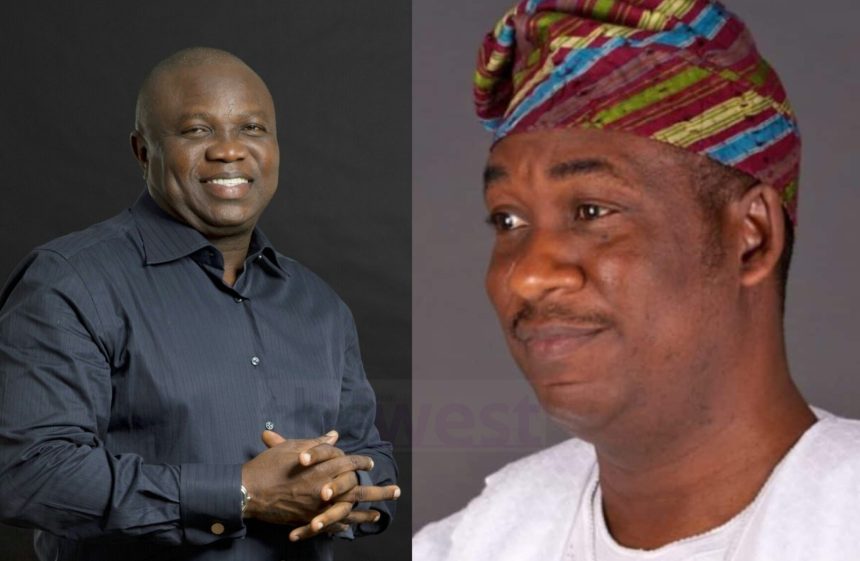
With the primaries now on the horizon, scheduled by INEC to hold between April 23 and May 30, 2026, it is necessary to state plainly: the emergence of Dr. Obafemi Hamzat as Lagos governor would be an act of political recklessness. And the return of Akinwunmi Ambode is not nostalgia. It is justice.
I. The Faleke Question: An Outsider Pushing a Stranger
Before we even arrive at Hamzat’s own considerable baggage, we must pause at the identity of his most vocal public champion. James Faleke, the lawmaker representing Ikeja Federal Constituency who loudly called on Lagos APC members to rally behind Hamzat, is not a Lagos man.
That is not an insult. It is a fact. And in the context of a succession debate where the GAC itself has been forced to grapple with questions of indigeneship, it is a fact that demands interrogation. Here is a man from outside Lagos State, with no ancestral roots in Lagos soil, loudly directing Lagos people on who should govern their state. He is engineering a consensus for a candidate whose own Lagos roots are, as we shall shortly demonstrate, highly questionable.
“Bí ẹrú bá pẹ́ nílé, ó máa ń bu àjọbi ní”, MEANING: When a slave is granted too much leeway as a freeborn, he turns around to despise the ancestors. The proverb is ancient but its application is fresh. When those with no stakes in Lagos’ ancestral soil begin to dictate its political inheritance, when outsiders use proximity to power to override the legitimate aspirations of sons of the land, Lagos elders have always had a name for it. This is not mere rhetoric. It is a warning. Because the man Faleke is promoting is himself a man whose claim to Lagos origins cannot survive serious scrutiny.

II. The Geography of Convenience: Where Exactly Is Hamzat From?
There is a question that the GAC has carefully avoided, that the Lagos APC’s cheerleaders have deliberately sidestepped, and that this column will now ask without apology: where, precisely, does Dr. Kadri Obafemi Hamzat come from?
It is not a trivial question. In Lagos politics, where indigeneship is a live constitutional and cultural variable, where the GAC itself has historically demanded that its candidates demonstrate roots in the soil they seek to govern, the question of where a man hails from is not ethnic sentimentality. It is a basic credential check. And on this credential, Hamzat’s record is, to put it charitably, geographically creative.
Consider the known facts. His late father was the Oba of Afowowa Kingdom in Ewekoro Local Government Area, in Ogun State. Not Lagos. Ogun. The man who would be governor of Lagos State was born to a traditional ruler whose throne, whose authority, and whose ancestral identity were planted firmly in another state entirely.
Now consider the living evidence. Hamzat’s blood brother, not a distant cousin, not a political associate, but a sibling sharing the same parents, currently sits as Local Government Chairman in Ifako-Ijaiye, Lagos. Ifako-Ijaiye. A mainland local government with no geographic, cultural, or administrative connection to Epe, the Lagos constituency Hamzat has chosen to claim as his own.
The father: Ewekoro, Ogun State. The brother: Ifako-Ijaiye, Lagos. The candidate himself: Epe, Lagos East. Three members of the same nuclear family, three different locations across two states.
This is not a family. This is a political franchise with multiple branch offices, each registered in a different constituency for maximum electoral coverage.
In 2018, the PDP raised this matter formally, alleging that Hamzat was an indigene of Ogun State. The APC dismissed it then as opposition mischief. But the facts have not changed. The father’s throne did not relocate to Lagos. The brother’s chairmanship in Ifako-Ijaiye remains unexplained. And Hamzat’s claim to Epe, the Lagos East heartland, a zone with its own proud, distinct political culture and legitimate sons, has never been subjected to any serious scrutiny by the party gatekeepers now eager to hand him the state’s highest office.
This matters beyond legal technicality. Lagos has in recent months seen organised voices demanding that key leadership positions, governor, deputy governor, Speaker… be occupied by genuine indigenes. A group under the aegis of Lagos State Prominent Indigenes, in a communiqué signed by its Convener Adesunbo Onitiri in March 2026, resolved that key leadership positions in Lagos should be occupied by indigenes. If that principle means anything, it must apply consistently, and it must begin with asking the candidate who claims Epe to prove that Epe claims him back.
The people of Epe are not a political alibi. They are a constituency with memory. And a man who cannot give a straight answer about where he is from will find it very difficult to give straight answers about where he is taking a state of 24 million people. Credibility is not departmental, it does not apply only to policy speeches and manifesto promises. It applies to the foundational question of who you are and where you stand.
III. The Arithmetic of Sixteen Years
Let us deal with mathematics next, because numbers do not lie the way politicians do.
Since the return of democracy in 1999, the Lagos governorship has passed through: Bola Tinubu, a Muslim, eight years (1999–2007). Babatunde Fashola, a Muslim, eight years (2007–2015). Akinwunmi Ambode, a Christian, four years (2015–2019). Babajide Sanwo-Olu, a Christian, eight years (2019–2027).
If Hamzat, a Muslim, now inherits the seat from 2027, Lagos will have had only twelve Christian years against sixteen Muslim years since democratisation, and four of those Christian years, Ambode’s, were stripped away by an internal coup that had nothing to do with performance and everything to do with godfather politics and self-serving ego.
Now, some will immediately accuse this column of stoking religious sentiment. Let them. The accusation is a deflection. This is not theology, it is political arithmetic in a state where Christians and Muslims are numerically comparable and where identity is not incidental but foundational to civic life.
Research into voting behaviour in the 2023 Lagos gubernatorial election confirmed a significant relationship between religious identity and voter behaviour, with patterns showing a measurable tilt toward religious inclination. These are not abstract grievances. They translate directly to ballot box behaviour. The APC leadership, of all people, should understand this, they have lived it.
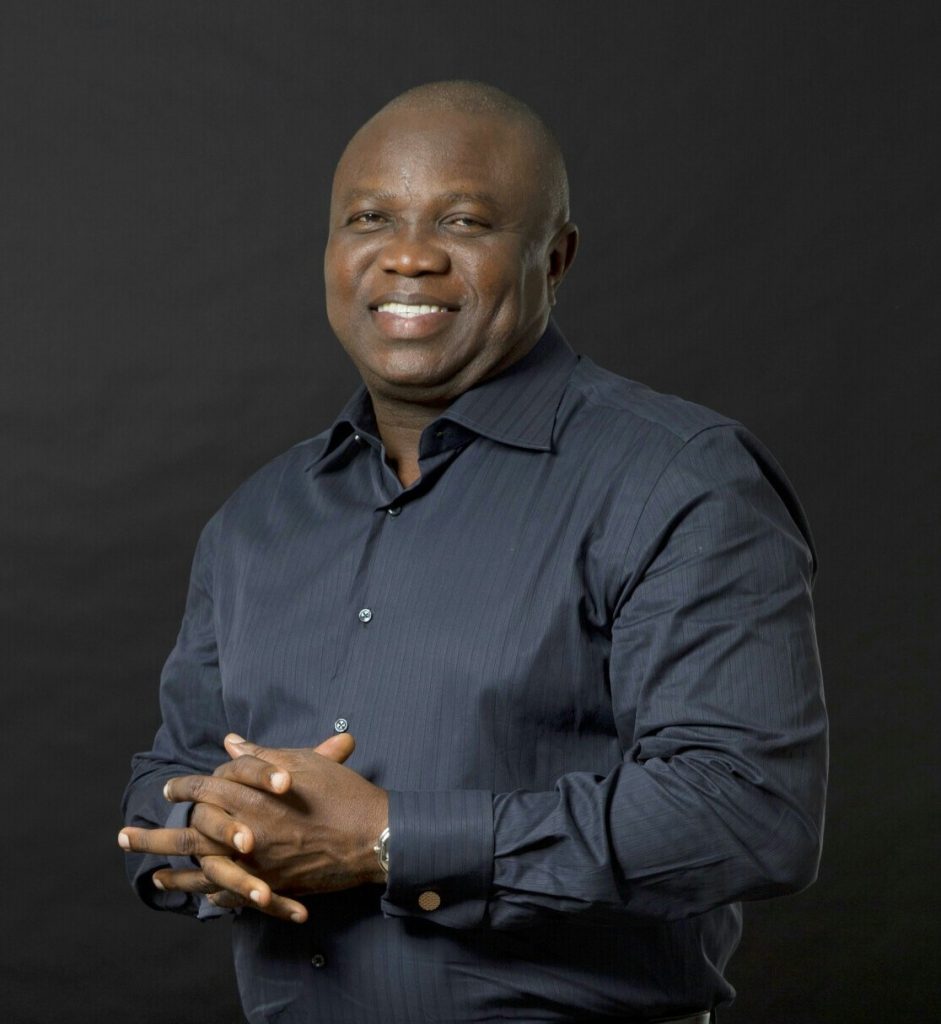
Mr. Akinwunmi Ambode is a Christian. He served only four years, schematically denied a second term by the very same BabaSope culture. By the logic of natural justice, by the mathematics of balance, and within the full ambits of the law, Ambode has four legitimate years left to reclaim. His emergence would not break any formula. It would restore equilibrium.
IV. Eight Years of What, Exactly?
Here is where the argument leaves religion and enters the courtroom of competence.
Hamzat is currently serving his second term as Deputy Governor, having previously spent eight years as Commissioner for Works under Governor Babatunde Fashola. Add those numbers together and you have sixteen years of proximity to Lagos governance without a single year of executive authority. Sixteen years in the building. Never once holding the keys.
Deputy governors in Nigeria occupy a peculiar constitutional purgatory. They attend commissionings. They represent the governor at second-tier events. They sit in meetings but rarely drive agenda. The real question for any aspirant rising from the deputyship is simple and blunt: what is yours? Not what you witnessed. Not what you applauded. Not what you were present for. What did you build? What policy bears your fingerprint?
From Agege to Ajah, from Badagry to Ikorodu, what can any resident of Lagos point to and say with confidence, ‘That is Hamzat’s work’? The silence on this question is its own answer.
Party insiders describe Hamzat as ‘cerebral, educated, and policy-oriented.’ Cerebral is useful. Policy-oriented is encouraging. But they are inputs, not outputs. Lagos does not need a deputy governor with good intentions. It needs a governor with a record. And on record, Hamzat brings the curriculum vitae of a loyal second, impressive in protocol, invisible in legacy.
Meanwhile, the indigeneship questions remain unresolved, and in a general election, opponents will find every needle in every haystack. These are vulnerabilities the party would be choosing to inherit. That is not leadership selection. That is liability adoption.
V. The Ghost That Outperforms the Living
Now consider what Akinwunmi Ambode achieved in four years, four years, not eight, not sixteen, years cut short not by failure but by internal vendetta. When Ambode came on board on 29 May 2015, one of the first steps he took was to visit the major traffic flashpoints in the state and, together with his team, work out strategies not only to ensure the free flow of traffic but to change the aesthetics of Lagos for good. This was not campaign poetry. It was operational governance from day one.
His unprecedented ‘114 Roads’ project, in which each of the 57 local councils received two good roads, was completed by May of his first year. His philosophy that a well-lit Lagos would reduce crime saw him light up at least 365 streets. On security, within months of taking office, he acquired ten armoured tanks, three helicopters for aerial surveillance, two gun boats, fifteen armoured personnel carriers, and dozens of operational trucks. The state’s budget performed at an average of 85 percent annually under his watch, a figure that, in Nigeria’s context of fiscal recklessness, is closer to a miracle than a statistic.
He gave Lagos the world-class Oshodi Transport Interchange. He built the Lagos Theatre. He delivered the JJT Park. He commissioned the longest pedestrian bridge in Nigeria at Ojodu-Berger. He signed into law the Lagos State Electric Power Sector Reform Law to guarantee a 24-hour economy. He established the Lagos State Consumer Protection Agency. He disbursed the N25 billion Employment Trust Fund targeting artisans and entrepreneurs in the informal economy. He equipped primary healthcare centres with mobile intensive care units across all 26 general hospitals.
He accomplished more in four years than the combined output of the last eight years of this administration, and he did it while being quietly undermined from within.
Today, residents still speak of the Ambode era as a benchmark. Not with the hazy romanticism of those who forget history, but with the precise, detailed memory of people who lived in a city that, for four years, seemed to be genuinely trying to become what it always claimed to be. That is the definition of governance. And that record was built in four years.
The Ambode Support Group, in agitating for his return, puts it plainly: his achievements in human capital development, infrastructure, and overall transformation of Lagos are what supporters cite when they say he was certainly not denied a second term because of poor performance. That sentence contains an indictment, quiet as it is. The APC stripped Ambode of re-election not because voters rejected him, but because the machine decided his independence was inconvenient.
VI. The 2023 Warning Shot They Ignored
The APC is operating with selective amnesia about 2023. Let us restore the memory.
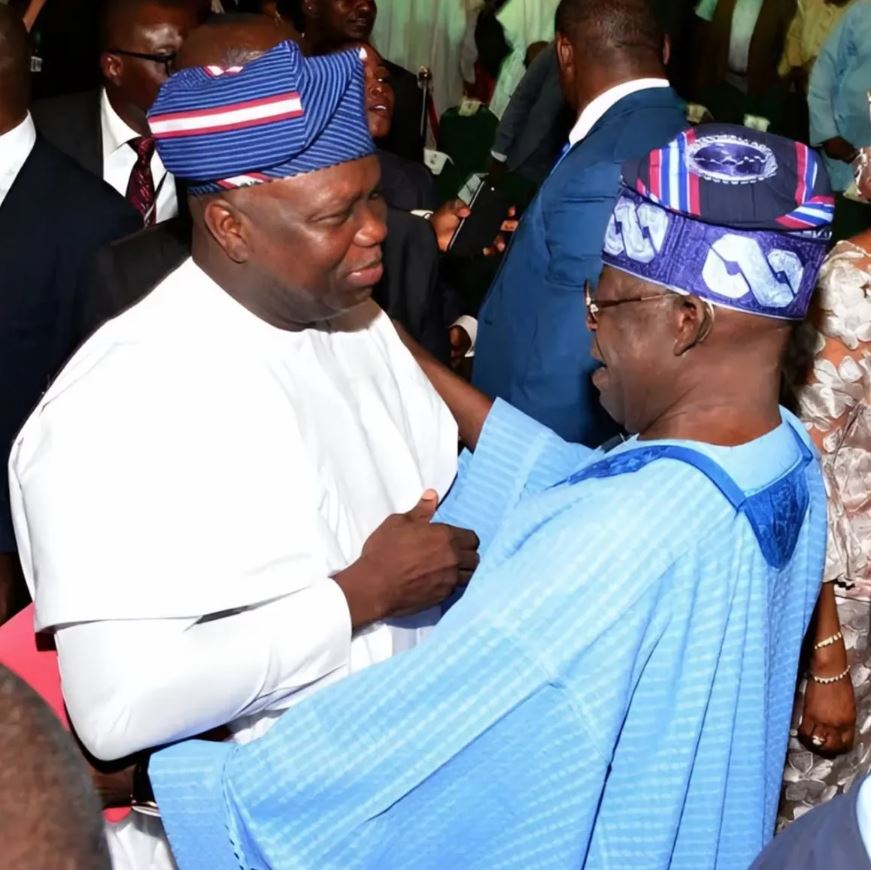
President Tinubu lost Lagos, his political home, the state he joined others build and controlled for over two decades, to Peter Obi of the Labour Party in the presidential election. The party’s official explanation was tidy and convenient: the Igbo community in Lagos had voted in protest. A neat, ethnic explanation for a politically embarrassing result.
It was also, at best, a partial truth.
The polling unit data from Surulere, Ikeja, Yaba, and other Yoruba-majority APC heartlands told a different story: depressed turnout in strongholds, unexpected votes for a Labour candidate whose campaign had no real Lagos structure, a base that did not show up with the enthusiasm the party expected. These were not Igbo precincts. These were APC precincts. The protest vote came from inside the APC house.
The panic that set in during the Sanwo-Olu governorship re-election campaign, when humongous cash was suddenly released for a last-minute blitz of media jingles and rice handouts within mere days, was a direct consequence of that near-death experience. The party did not reflect on what caused it. It spent. It did not listen to its members. It bought their compliance. And it called the result a victory, papering over the fractures with naira.
Now, with Ambode’s supporters actively grumbling, Christian civic voices beginning to stir, an indigeneship crisis looming over the preferred candidate, and a GAC-driven coronation taking shape in broad daylight while primaries loom weeks away, the conditions for a repeat protest vote are being assembled brick by brick.
If the GAC forces Hamzat in 2027, the aggrieved, Ambode’s loyalists, the Christian electorate that has been structurally patient and is now structurally restless, genuine Lagos indigenes offended by the BabaSope system, and ordinary party members tired of being managed like cattle, will not simply stay home. They will vote against the APC in a way that makes 2023 look like a gentle tremor before a real earthquake.
The APC does not need enemies to lose Lagos. It needs only to keep ignoring its friends.
Conclusion: Give Lagos Back to Lagos
Dr. Hamzat may be qualified on paper. But qualification without legitimacy is a CV without a job offer. And legitimacy in a democracy does not flow from a GAC meeting in Ikoyi. It flows from the people, from their memory, their trust, and their willingness to stand in line and vote for you.
On every variable that matters, executive record, religious balance, constitutional eligibility, clarity of origin, popular goodwill, Akinwunmi Ambode outscores the deputy governor who has spent eight years waiting for permission to matter.
Ambode governed this state for four years and left it measurably better than he found it. He was removed without cause by a machine that confused loyalty with subservience and independence with disloyalty. He has since done the hard thing: returned to the fold, swallowed bitterness, campaigned for the president who benefited from his removal, and waited. That is not weakness. That is statecraft.
The question before the GAC, before the primaries, and ultimately before the people of Lagos is not whether Hamzat is eligible in the narrow legal sense. It is whether Lagos, in 2027, will be governed by a man the people recognise, or by an arrangement the people merely tolerate.
The two things look similar from Abuja. They produce very different results in Mushin, in Badagry, in Ikorodu, in Surulere, in the polling units where the final verdict is always delivered.
Lagos is not a fiefdom. It is a state of thinking citizens with long memories and, when pushed far enough, short fuses.
As for Faleke and those like him, outsiders with no roots in Lagos earth who now presume to direct its inheritance, the ancestors have already spoken. The proverb stands. When a stranger is given a seat at the table and mistakes it for ownership of the house, the elders must speak up. Before the house is given away.
- USMAN ADEWALE, a Political Analyst wrote from Ikorodu, Lagos




