


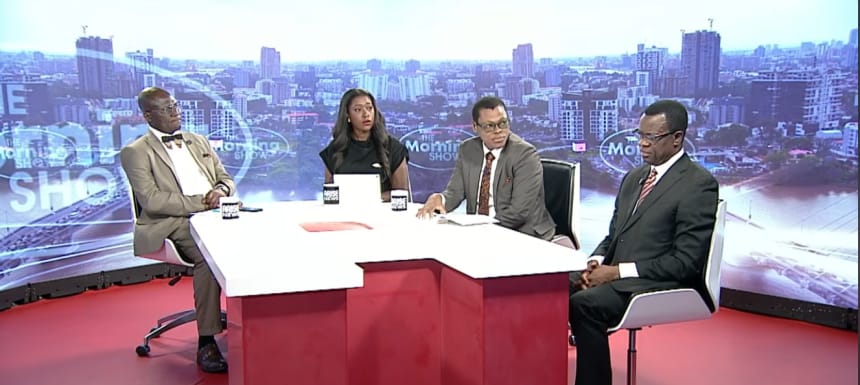
A former National Commissioner of the Independent National Electoral Commission (INEC), Mike Igini, has issued a stark warning that the integrity of the 2027 general election could be “in flames” unless the National Assembly moves quickly to repeal three “dangerous” provisions in the newly amended Electoral Act.
Igini, who spoke on Arise TV’s morning show on Wednesday, said he has uncovered sections of the 2026 amendment that he believes have systematically sabotaged the foundation of Nigeria’s electoral process, starting with the ballot paper itself.

“I have now found three more dangerous provisions,” Igini told host Dr. Reuben Abati. “The ballot paper that will be used for the 2027 election that does not bear the official security features of INEC should be accepted by a presiding officer.”
Igini pointed specifically to Section 63 of the amended Act, arguing that it gives presiding officers a dangerously wide discretion to accept ballot papers even when they lack official INEC security markings.
“What that means is that before this election, politicians who now have access to the security features of INEC ballots are going to produce their own ballot papers. They are going to print their own,” he said.
He recalled that in 2019, in two states, one in the South-East and one in the South-South, unscrupulous INEC officials allegedly gave serial numbers and security features of ballot papers to politicians.
Igini also raised the alarm over Section 138, which he described as “one of the rigging provisions” that election observers had repeatedly cried out to be removed.
The section states that an act or omission contrary to INEC’s instructions or directives, but not contrary to the Act itself, shall not of itself be grounds for questioning an election.
“They are saying that a presiding officer, a collation officer, a returning officer can abandon INEC regulations and guidelines,” Igini said. “So they have provided immunity.”
He noted that in 2019, under President Muhammadu Buhari, no Electoral Act was passed precisely because such provisions were rejected. “Now they are back,” he said.

The former INEC commissioner further warned about Section 137, which he said provides that in any election petition, it shall not be necessary to join any presiding or returning officer accused of misconduct.
“That was why in 2019 and 2023, you found that the people who actually rigged the election, the presiding officers who were the makers of the documents, were not brought to the tribunal,” Igini said.
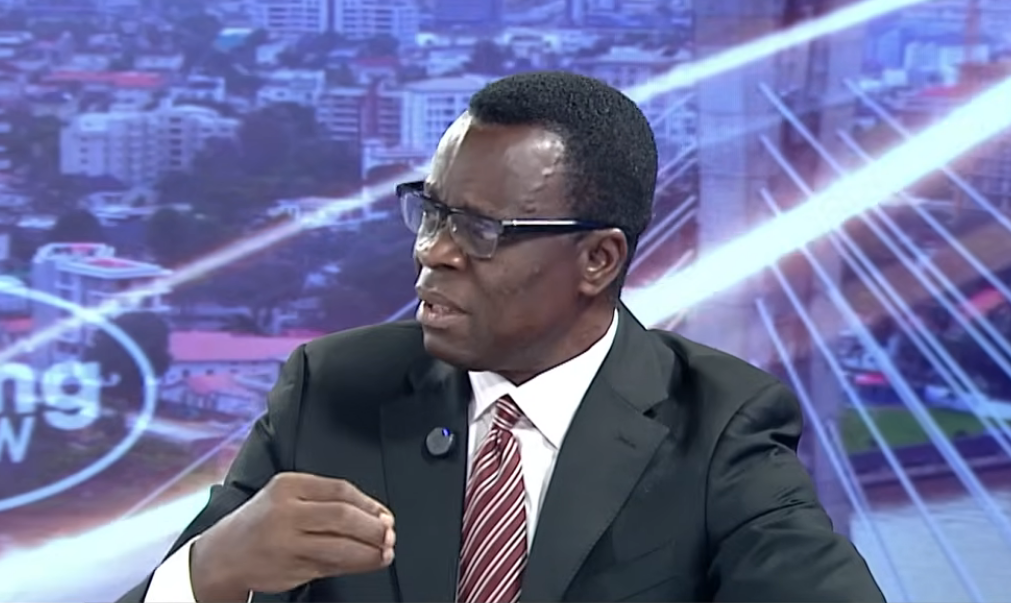
He added that ad hoc staff, who are not regular INEC employees, have already been infiltrated by politicians. He recalled an incident in Cross River where a young man was arrested in his office with fake voter cards intended to be used during ad hoc recruitment.
“When he gets in, it is the party that recruited him. They will give him this card,” Igini said.
The former INEC chief did not mince words about the overall direction of the amendments. “It looks as though this law as we speak today is designed in such a way that the integrity of INEC is already destroyed,” he said. “It is a law that has been made to favour the political class.”
When asked whether he could stake his integrity on the 2027 election, Igini replied: “If these provisions are not repealed immediately, I want to say that the integrity of the 2027 election will be in flames. Why would somebody board a plane that we know is going to crash?”
‘Democracy cannot survive without a courageous judiciary’
“The greatest promise of democracy … the difference between advanced democracy, a growing democracy, and a democracy in retrogression has to do with the rule of law,” he said, citing French scholar Alexis de Tocqueville’s work on American democracy.
But he warned that Nigerian courts are increasingly being asked to answer political questions rather than legal ones, “who should be a candidate, who should be a secretary of a party”, which makes the judiciary vulnerable to capture by politicians.
“Whenever we have a judicial system that shows signs of weakness, collapse, or bows to the suffocating influence of corrupt politicians, democracy is in danger,” Igini said.
He appealed to his colleagues in the legal profession: “Democracy will have no hopeful future if there is no opposition. That is what guarantees democracy.”
With the 2027 election clock ticking, Abati asked whether there was still time to amend the flawed sections. Igini insisted there was. “How long does it take to amend isolated provisions? Section 63, that is the foundation of the election,” he said.
He recalled advising President Bola Tinubu, who ascended on February 18, 2026, to ensure the amendments were thoroughly reviewed before they became law.
“The argument that it is a work in progress, what kind of work in progress?” Igini asked. “The 2022 Electoral Act is a retrogression. The law must be stable and neutral. The sanity of the law is what generates confidence in the electoral process.”




