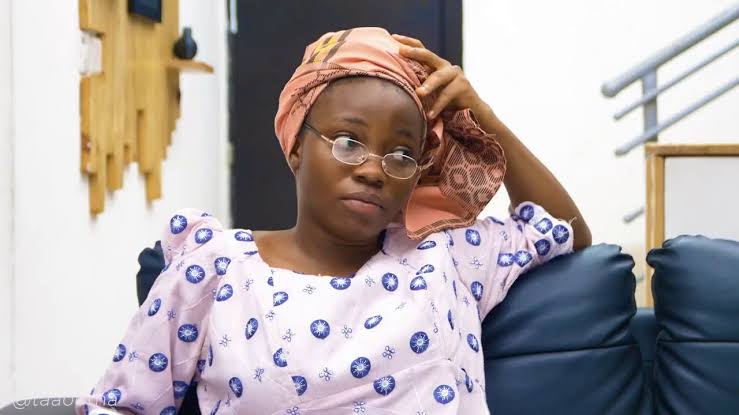
Popular Nigerian skit maker and comedian, Maryam Apaokagi, known professionally as Taoomaa, has broken from her usual comedic content to deliver a stark condemnation of the government’s handling of the nation’s protracted security crisis.
Her post, published on her official Facebook wall on Friday, comes against a backdrop of renewed public outrage following a series of mass abductions of schoolchildren in northern Nigeria and a recent surge in terror attacks across the country.

“It’s getting hard not to feel like Nigerians are just numbers on a sheet. Mere statistics! 100 today, 23 tomorrow. No justice. No accountability. No meaningful action,” Taoomaa wrote, capturing a sentiment of statistical fatigue and despair felt by many citizens.
Directly addressing the nation’s leader, she voiced a demand that has become a recurring refrain from a weary populace: “Mr. President, Nigerians are tired of condolences and committees. We need real protection, not statements. We need actual results, not promises.”
The comedian’s message taps into a deep well of frustration over what many perceive as a disconnect between official rhetoric and tangible outcomes on the ground. She questioned how the nation has grappled with the same fundamental security threats for over a decade and a half without a decisive resolution.
“How can a country carry the same security crisis for over 15 years and still be running in circles?” she asked. “Why is it so hard to track down criminals, dismantle terror groups, and guarantee safety for ordinary people? Where exactly is the disconnect?”
Her post highlights the daily trauma of following the news in Africa’s most populous nation. “Every morning brings a new horror story, a new family grieving, a new headline that shouldn’t exist,” she lamented. “We can’t even get one week, just one week, of good news.”
The decision by a figure like Taoomaa, whose platform is built on humor and entertainment—to voice such a serious political critique underscores how the insecurity has become an inescapable concern for all Nigerians, transcending profession, region, and social status.
Public reactions to her post have been overwhelmingly supportive, with comments and shares flooding social media platforms. Many users thanked her for using her influence to amplify a critical national issue, while others shared their own stories of fear and loss.
“You have spoken the minds of millions of Nigerians,” one user commented. “Thank you for using your voice for the voiceless,” wrote another.
The post concludes with a simple yet powerful affirmation of citizens’ basic rights: “Nigerians deserve better. We deserve safety. We deserve leadership that treats human lives as more than statistics.”