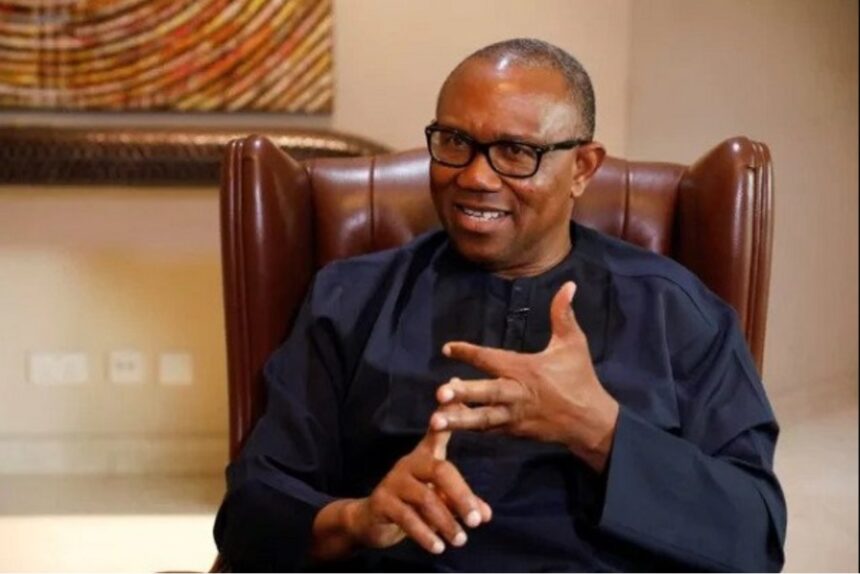
Former presidential candidate Peter Obi has raised the alarm over Nigeria’s growing debt profile, describing the latest loan approvals by the Senate as reckless and dangerous for the country’s future.
On July 22, 2025, the Senate approved an additional $21 billion, €2.2 billion, ¥15 billion in external borrowing, along with a ₦750.98 billion domestic bond and a €65 million grant for the 2025–2026 fiscal cycle.

In a strongly worded statement, Obi said the fresh loans, amounting to about ₦37.2 trillion, have now pushed Nigeria’s total debt to around ₦187 trillion, up from ₦149.39 trillion recorded in Q1 2025. He warned that the figure could exceed ₦200 trillion before the end of the year.
“This government has borrowed the equivalent of nearly 70% of our GDP before rebasing, and over 50% of our GDP even after rebasing,” Obi noted. “This is the highest debt-to-GDP ratio in our history.”
He accused the current administration of accumulating “exponential levels of unsustainable debt” without tangible results in critical sectors such as education, healthcare, power, and security.
According to Obi, despite increasing security spending from ₦2.98 trillion in 2023 to ₦4.91 trillion in 2025, over 10,217 Nigerians have been killed and 672 villages destroyed between May 2023 and May 2025. He said over 135,000km of roads remain unpaved and power generation is still below 5,000 MW for over 200 million people.
He also cited the recent warning by Médecins Sans Frontières (Doctors Without Borders) about a growing malnutrition crisis in northern Nigeria, with Katsina State among the worst-hit. “The deaths of 652 children due to malnutrition is unacceptable in a country so richly endowed,” he said.
Obi argued that borrowing itself isn’t bad if it’s tied to productive investments, but slammed what he called the government’s “pattern of borrowing without accountability or transformational impact.”
“This borrowing spree is mortgaging the future of our children. We must cut the cost of governance, block leakages, invest in human capital, and build a productive economy,” he said.
He called for a return to disciplined economic management and responsible leadership. “It is time to stop this fiscal indiscipline. Nigeria cannot continue to borrow recklessly while poverty deepens and public trust erodes.”
Obi ended his statement with a call to action: “A new Nigeria is POssible.”