


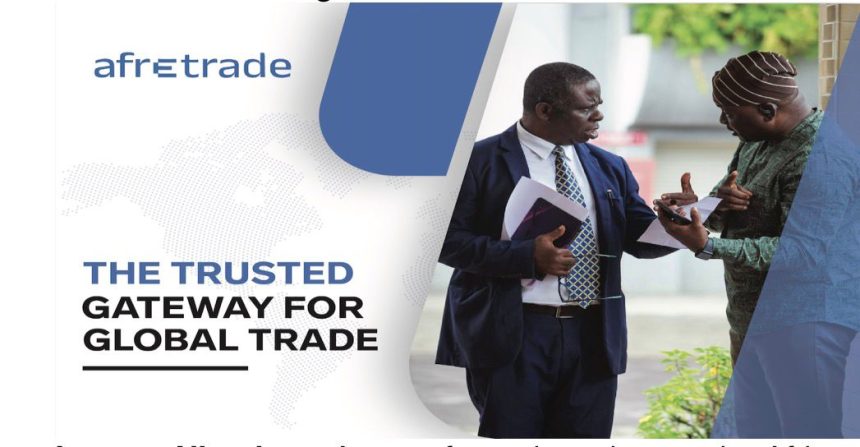
A new digital platform aimed at transforming Africa’s role in global trade is set to launch on Tuesday, November 18, in Lagos. Named AfreTrade, the initiative is designed to serve as a gateway for African businesses to access international markets and to help activate the African Continental Free Trade Area (AfCFTA).
The official launch at the MUSON Centre in Onikan will unveil an integrated platform built around a “3T” model: Trade, Talent, and Training. According to its founders, AfreTrade is designed to empower African small and medium-sized enterprises (SMEs) by derisking transactions, verifying partners, and providing critical training.

The platform arrives as African SMEs, which account for 80-90% of businesses on the continent, continue to face significant barriers to global trade. These obstacles include high financing costs, with banks charging interest rates of 20-25%, and complex regulatory and non-tariff barriers that block nearly half of potential exports in regions like East Africa.
Speaking ahead of the launch, AfreTrade’s Founder and CEO, Mr. Lekan Salaam, framed the platform as a bridge for the continent’s economic gap. “The way we envision AfreTrade is to bridge the economic gap on the African continent, create an environment of collaboration without subordination, and unlock the continent’s full potential,” he said.
Echoing this vision, the Chief Operating Officer, Dr. Charly Lemaasi, stated, “Africa’s renaissance is the responsibility of her own children… Only a new mind can unlock a new African narrative.”
The platform’s strategy focuses on enabling widespread entrepreneurship as a solution to job creation. AfreTrade’s Chief Product Officer, Mr. Jubril Gbajabiamila, noted that while “nobody is going to create a hundred million jobs in Africa,” the platform can “enable a hundred million businesses to flourish—each employing five to ten people.”
The launch of AfreTrade comes at a critical time, with Africa’s share of global trade estimated at just 3.3%. The platform is calling on government institutions, private sector leaders, and development organizations to join its movement to redefine Africa’s position in global commerce.




